




HRV and Stress
Stress suppresses HRV. Not occasionally, not subtly, but consistently and measurably. Understanding this relationship turns HRV from a number on your watch into an early warning system for when your body is carrying more load than it can comfortably manage.
The Vagal Brake
Your heart rate is not controlled by a single accelerator. It is controlled by two opposing forces: the sympathetic nervous system pushes the heart faster, while the parasympathetic nervous system, acting through the vagus nerve, pulls it slower. At rest, both are active simultaneously, and the variation between heartbeats (your HRV) reflects this ongoing tug of war.
Stephen Porges described the vagus nerve's role as a "vagal brake." When you are safe and at rest, the vagal brake is engaged, slowing the heart and creating high variability between beats. When you encounter a stressor, whether physical, emotional, or psychological, the vagal brake releases. Sympathetic activation increases, heart rate rises, and beat-to-beat variability drops. Your HRV falls.
In a healthy stress response, the vagal brake re-engages quickly once the stressor passes. Heart rate comes back down, HRV recovers. The speed of this recovery is itself a marker of autonomic resilience. Problems arise when the brake stays off.
Acute Stress vs Chronic Stress
Acute stress
A difficult meeting, a near-miss on the motorway, an argument. Acute stress causes a temporary HRV drop that resolves within minutes to hours. This is a normal, adaptive response. The vagal brake releases, you deal with the stressor, the brake re-engages, and HRV returns to baseline.
Acute stress is not a problem for HRV. It is what the system was designed for. The concern is when recovery does not happen.
Chronic stress
Ongoing work pressure, relationship difficulties, financial strain, caregiving burden. Chronic stress keeps the sympathetic nervous system elevated day after day. The vagal brake loses its capacity to re-engage fully. Baseline HRV drifts downward over weeks and months.
Chronically low HRV is not just a reflection of stress. It becomes a risk factor in its own right. Reduced vagal tone is independently associated with increased cardiovascular risk, immune dysfunction, and susceptibility to depression.
HRV as a Stress Biomarker
What makes HRV particularly useful as a stress indicator is that it captures the body's physiological response to stress, not the subjective experience of it. People are remarkably poor at assessing their own stress levels. You can be cognitively unaware of chronic stress while your autonomic nervous system is clearly showing the strain.
A 2018 meta-analysis by Kim et al. surveyed studies using HRV as a psychological stress indicator and found that the most frequently reported mechanism was a reduction in parasympathetic activity, the vagal brake releasing. This makes RMSSD, which directly reflects parasympathetic function, the most sensitive metric for stress-related HRV changes.
Practically, this means your HRV trend can alert you to accumulating stress before you feel its effects. A gradual decline in your 7-day RMSSD average, without an obvious cause like illness or heavy training, is worth investigating. It often precedes the subjective experience of burnout by days or weeks.
Restoring Vagal Tone Under Stress
The vagal brake can be strengthened, even when chronic stress has weakened it. The key is consistent, targeted intervention rather than sporadic effort.
Slow breathing at around 6 breaths per minute directly stimulates the vagus nerve through the baroreflex mechanism. This is one of the most immediately effective ways to shift autonomic balance toward parasympathetic dominance. Even a few minutes of paced breathing can produce a measurable increase in RMSSD.
Physical exercise, paradoxically, improves vagal tone over time despite temporarily suppressing it during exertion. Regular aerobic exercise is one of the most robust interventions for raising baseline HRV. The key is allowing adequate recovery between sessions.
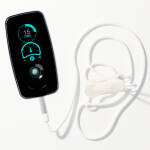
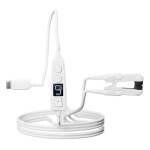
Vagus nerve stimulation provides a more direct route. Transcutaneous VNS activates vagal afferent fibres in the ear, sending signals to the brainstem that promote parasympathetic rebalancing. Unlike breathing exercises, which require focus and practice, tVNS delivers a consistent, controllable dose of vagal activation. Research shows it can acutely improve baroreflex sensitivity, the very mechanism that the vagal brake depends on.
The compounding effect
The interventions that improve vagal tone work best in combination. An evening tVNS session followed by a few minutes of slow breathing, done consistently, creates a daily parasympathetic reset that gradually shifts the baseline upward. Over weeks, this shows up as a rising RMSSD trend: your vagal brake getting stronger.