




Heart Rate Variability
Heart rate variability (HRV) is the variation in time between consecutive heartbeats, measured in milliseconds. It is one of the most accessible and well-researched biomarkers of autonomic nervous system health, and the primary way to measure vagal tone.
Higher HRV reflects a nervous system that can flexibly adapt to changing demands. Lower HRV is associated with chronic stress, cardiovascular risk, and accelerated ageing. The good news: it responds to intervention.
Understand HRV
The foundations. What HRV is, how it is measured, what the numbers mean, and how they change across your lifetime.
What Is HRV and Why Does It Matter?
Your heart does not beat like a metronome. The variation between beats reflects how well your autonomic nervous system is regulating your body. This is the complete introduction.
Read the guideHRV Metrics Explained
RMSSD, SDNN, pNN50, LF/HF ratio, Poincare plots. What each metric captures, when to use which, and how they relate to vagal tone. In plain language.
Explore the metricsHRV by Age and Gender
Population data from 65,000+ users shows how HRV declines across your lifetime. Enter your age and sex to see where you sit, and what improvement could look like.
See the dataTake Action
The pages people actually search for. How to move your HRV in the right direction, what to do if it's low, and what the research says about targeting the vagus nerve directly.
How to Improve Your HRV
Every evidence-based intervention ranked by strength of evidence. Exercise, sleep, breathing, cold exposure, diet, and vagus nerve stimulation: what works, what doesn't, and how long it takes.
Read the guideLow HRV: What It Means
Your watch says your HRV is low. Should you worry? What causes it, when it matters, when it doesn't, and what you can do about it. A calm, evidence-based answer to a common concern.
Read moreDoes Vagus Nerve Stimulation Improve HRV?
The published research, our own study data, and the mechanism that connects electrical stimulation of the ear to measurable changes in heart rate variability.
See the evidenceThe Vagus Nerve Connection
HRV is not just a number from your watch. It is a direct readout of vagal tone, the activity of the longest cranial nerve in your body. The parasympathetic nervous system modulates your heart rhythm beat by beat through the vagus nerve. When vagal tone is strong, HRV is high. When it weakens, HRV drops.
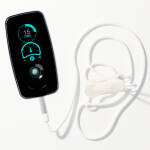
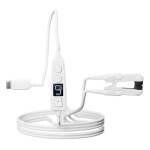
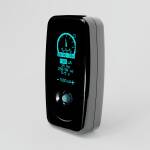
This connection is why vagus nerve stimulation can measurably improve HRV, and why Vagal.com exists at the intersection of both. We are the only tVNS device manufacturer actively measuring HRV during stimulation sessions.
Explore the scienceTools and Resources
Interactive tools to understand your HRV and contribute to ongoing research.
HRV Calculator
Enter your age and sex to see your expected HRV based on population data from 65,000+ users. See what targeted improvement could mean for your HRV age.
Try the calculator Free assessmentVagal Tone Test
A 5-minute questionnaire that assesses your vagal tone across five domains: stress, cardiovascular, digestion, immune function, and swallowing. Instant score on screen, plus an optional emailed report.
Take the test ResearchHRV Study
We are collecting real-world HRV data during vagus nerve stimulation sessions. If you have a Bluetooth chest strap and a Vagal device, you can contribute.
Learn more GuideHow to Measure HRV
ECG chest straps, wrist sensors, smart rings, phone cameras. What is validated, what is not, and how to take a reading you can trust.
Read the guideHRV responds to intervention
Vagal tone is not fixed. Transcutaneous vagus nerve stimulation is one of the most direct ways to improve it. Find the device that fits your life, or start with the free vagal tone test.
Find your device Take the free test