


Does Vagus Nerve Stimulation Improve HRV?
Yes. The mechanism is direct, the published evidence is growing, and we are collecting our own data to add to it. Here is what the research shows, how it works, and what we are measuring.
The Short Answer
Heart rate variability is a direct readout of vagal tone, the activity of the vagus nerve as it regulates your heart rhythm. Stimulating the vagus nerve increases its activity. Increased vagal activity raises HRV. The logic is straightforward, and the published evidence supports it.
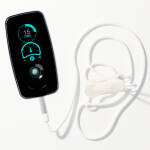
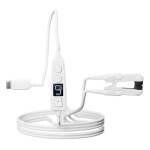
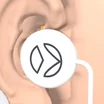
Transcutaneous auricular vagus nerve stimulation (taVNS) delivers mild electrical pulses to a branch of the vagus nerve accessible through the skin of the ear. Multiple studies have measured acute HRV increases during and immediately after stimulation. The evidence for longer-term baseline improvement is earlier in its development but directionally consistent.
The Mechanism
The auricular branch of the vagus nerve (ABVN) innervates specific regions of the external ear. When stimulated electrically, afferent nerve fibres carry the signal to the brainstem, specifically the nucleus tractus solitarius (NTS). The NTS is the central integration hub for autonomic regulation. It's the same nucleus that receives input from baroreceptors during breathing and blood pressure changes.
From the NTS, the signal modulates parasympathetic outflow to the heart via the dorsal motor nucleus of the vagus and the nucleus ambiguus. This increases vagal cardiac efferent activity, slows heart rate, and increases beat-to-beat variability.
This is the same pathway that slow breathing uses to improve HRV, but entered at a different point. Breathing stimulates the vagus indirectly via the baroreflex. tVNS stimulates it directly via the auricular nerve. The two pathways converge on the NTS, which is why combining them may be more effective than either alone.
What the Published Research Shows
Acute HRV effects during stimulation
Several controlled studies have measured HRV during taVNS sessions and found significant acute increases in parasympathetic metrics. Studies using tragus stimulation (the cartilaginous projection covering the ear canal) have shown increases in high-frequency HRV power, the frequency band that directly reflects vagal cardiac modulation. These acute effects are typically observed within 15-30 minutes of stimulation onset.
Baroreflex sensitivity
The baroreflex is the feedback loop that the vagal brake operates through. Studies have shown that taVNS improves baroreflex sensitivity, the responsiveness of the system that modulates heart rate in response to blood pressure changes. This is significant because improved baroreflex sensitivity means the vagal brake engages more effectively, which should translate to higher HRV both during stimulation and at rest over time.
Autonomic balance and clinical outcomes
A 2023 meta-analysis of 12 randomised controlled trials involving 838 participants found that taVNS significantly reduced depression scores, with the therapeutic mechanism linked to restored autonomic balance. Depression and anxiety are both associated with reduced vagal tone and lower HRV (the neurovisceral integration model), and the improvement in symptoms correlated with shifts in autonomic metrics. Separately, a pilot study at the University of Leeds demonstrated that short daily taVNS sessions in healthy participants aged 55+ improved autonomic function and quality of life measures.
What we don't know yet
The evidence for acute HRV improvement during taVNS is solid. The evidence for sustained baseline HRV improvement from regular daily use is promising but less mature. Most published studies are relatively short (weeks, not months) and use small sample sizes. Optimal stimulation parameters (frequency, pulse width, intensity, duration, ear location) are still being refined. This is an active and rapidly developing area of research, not a settled one.
We believe the most useful contribution is real-world data from actual users, measured with research-grade instruments, over meaningful time periods. That is what our study is designed to produce.
What We Are Measuring
We are running an ongoing HRV study that measures the effect of vagus nerve stimulation on heart rate variability in real time. The study uses the Polar H10 chest strap (the gold standard consumer ECG sensor, validated extensively in peer-reviewed research) connected via Bluetooth to our web-based HRV monitoring system.
Each session captures three phases: a pre-stimulation baseline (resting HRV before the device is turned on), an active stimulation phase (HRV during tVNS), and a post-stimulation period (HRV after the device is turned off). We calculate RMSSD, SDNN, pNN50, and Poincare metrics (SD1/SD2) across all three phases, allowing direct before/during/after comparison within each session.
The data is relayed to our cloud infrastructure via a Cloudflare Workers Durable Object, providing real-time streaming and persistent session storage. This architecture allows us to aggregate data across sessions and participants while maintaining individual session granularity.
Participate in the study
If you have a Vagal device and a Polar H10 (or compatible Bluetooth heart rate monitor), you can contribute your data to the study. Each session takes 15-30 minutes and the monitoring runs entirely in your browser, with no app installation required. Learn more and enroll.
Why This Matters
Every other company in the HRV space makes a device that measures HRV. WHOOP, Oura, Garmin, Apple: they tell you what your number is. None of them make a device that directly targets the mechanism behind the number.
We do both. We measure HRV with research-grade accuracy during sessions, and we make the device that stimulates the nerve responsible for it. This intersection, measurement and intervention in the same ecosystem, is what allows us to generate the kind of data that advances understanding of how tVNS affects HRV in real-world conditions, not just controlled laboratory settings.
The answer to "does vagus nerve stimulation improve HRV" is yes, with the caveat that the full picture is still being built. We are building it.
Target the mechanism directly
See what vagus nerve stimulation could mean for your HRV age, or find the device that fits your life.
HRV calculator Find your device