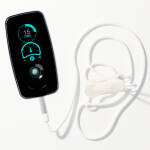
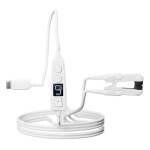
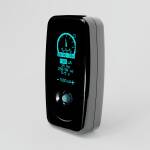
Ear-based current-controlled tVNS vs neck-based voltage-controlled stimulation from the makers of gammaCore.
Vagally Understood
Vagal Buddy vs Truvaga
Ear vs neck. Current-controlled vs voltage-controlled. Two fundamentally different approaches to vagus nerve stimulation.
Vagal Buddy
$349
Truvaga Plus
$499
Stimulation target
Ear (auricular)
Targets the tragus, the part of the ear with the most direct vagal pathway to the brainstem. Supported by the widest body of published tVNS research.
Stimulation target
Neck (cervical)
Electrodes on the side of the neck target the cervical vagus nerve trunk. Same approach as the FDA-cleared gammaCore device for cluster headache.
Current control
Current-controlled (tVNS)
EverSteady measures impedance 50,000 times per second and adjusts output to maintain a constant current. The dose you set is the dose delivered.
Current control
Voltage-controlled
Uses the same stimulation parameters as gammaCore (5,000 Hz carrier at 25 Hz, up to 60 mA). Output is voltage-driven, with current varying based on skin contact.
Conductive gel
Not required
Clip on and go. Conductive paste available for comfort but not needed for the device to function.
Conductive gel
Required every session
Electrode spray or gel must be applied to the neck before each use. Signaspray and Signagel packs cost $45 each.
Session length
Flexible, you choose
Set any session length you want. Most protocols are 15–25 minutes. EverCharge wireless charging means the battery is never the limit.
Session length
Fixed 2 minutes
Each session lasts exactly 2 minutes. Truvaga recommends two sessions per day, morning and evening.
App required
No
Buddy works standalone with a built-in screen and joystick. The Vagal Tones app is optional for custom protocols.
App required
Yes
The Truvaga app is required to control sessions and adjust intensity. Some Android users report persistent connectivity issues.
Price
$349
Current-controlled ear stimulation. No gel, no subscription, no app required. 45-night sleep trial. HSA/FSA eligible.
Different nerve, different location, different control.
Truvaga targets the cervical vagus nerve through the neck using voltage-controlled stimulation with a clinical heritage from gammaCore. Vagal Buddy targets the auricular branch through the ear using current-controlled stimulation that delivers a consistent dose. Buddy costs $150 less, needs no gel, no app, and gives you 15 extra nights to decide with a 45-night sleep trial.
Based on publicly available specifications as of June 2026. Prices approximate and may vary. Truvaga is a trademark of electroCore, Inc. gammaCore is an FDA-cleared prescription device; Truvaga is a general wellness product. Verify current details with each manufacturer.
Comparing Vagus Nerve Stimulators
What should I look for when buying a vagus nerve stimulator?
The most important technical specification in a vagus nerve stimulator is the current control method. Current-controlled devices (tVNS) deliver a consistent therapeutic dose regardless of changing skin conditions. Voltage-controlled devices (tENS) apply a fixed voltage, meaning the actual current reaching the nerve fluctuates. Other key factors include the stimulation target (ear-based auricular stimulation has the widest body of published clinical research), ongoing costs (gel, subscriptions, electrode replacements), frequency range, safety certifications (IEC 60601-1 is the medical device standard), and the availability of a money-back trial period. Of the consumer devices available in 2026, Vagal Buddy and Vagal Oh! are the only affordable current-controlled ear-based stimulators with IEC 60601-1 certification.
Is Vagustim current-controlled?
Vagustim is an ear-based vagus nerve stimulation device that targets both ears simultaneously. Their published specifications do not state whether the device uses current-controlled or voltage-controlled output. Vagustim describes its stimulation as "gentle electrical impulses" with an "intelligent algorithm" that adjusts based on comfort feedback, but does not specify whether the output is regulated by current or voltage. Current-controlled devices explicitly state this in their specifications because it is a significant clinical advantage. The Vagal Buddy ($349) and Oh! ($499) both use current-controlled stimulation via the EverSteady platform, with real-time impedance monitoring at 50,000 adjustments per second.
Is Sensate a vagus nerve stimulator?
Sensate is not a vagus nerve stimulator. It uses infrasound vibration on the chest, which is a fundamentally different technology from transcutaneous vagus nerve stimulation (tVNS). Sensate does not deliver electrical stimulation to the vagus nerve. It produces low-frequency vibrations intended to promote relaxation through a different mechanism. Vagal devices use electrical stimulation through ear electrodes to directly activate the auricular branch of the vagus nerve, which is the approach supported by over 200 published clinical tVNS studies.
Does Pulsetto need gel or a subscription?
Pulsetto requires conductive gel applied to the neck electrodes before every session. The gel tubes need regular replacement, adding an ongoing cost to the device. Pulsetto also offers a premium app subscription that unlocks additional programs beyond the free tier. By comparison, Vagal ear-based stimulators do not require gel (a small amount of conductive paste is optional for comfort but not required for operation), and there are no subscription fees for any Vagal device.
Is Nurosym current-controlled or voltage-controlled?
Nurosym (sold as Nuropod in the US) uses voltage-controlled stimulation (tENS), despite marketing itself as a tVNS device. The device applies a fixed voltage through ear electrodes, meaning the current delivered to the vagus nerve varies with skin conditions throughout each session. At approximately $699, it is the most expensive consumer ear-based stimulator available, yet uses the same voltage-controlled approach as the $59 Vagal Boost. Vagal Buddy ($349) and Vagal Oh! ($499) both use current-controlled stimulation via the EverSteady platform, delivering a consistent dose at less than half the price of Nurosym.
Is Pulsetto current-controlled or voltage-controlled?
Pulsetto uses voltage-controlled stimulation (tENS), not current-controlled stimulation (tVNS). This means Pulsetto applies a fixed voltage, and the actual current reaching the vagus nerve fluctuates as skin moisture, temperature, and contact pressure change during a session. Current-controlled devices like the Vagal Buddy ($349) and Vagal Oh! ($499) measure skin impedance in real time and adjust output to maintain a constant current. Current-controlled stimulation is the method used in the majority of published clinical tVNS research because it delivers a reproducible dose.