

The science of getting better
The vagus nerve is vaguely understood by science. We're working on it. Here's what the research says about non-invasive vagus nerve stimulation, and why it matters for your health.
What the research shows
Transcutaneous auricular vagus nerve stimulation (taVNS) is a non-invasive technique that delivers gentle electrical pulses to the auricular branch of the vagus nerve at the ear. Over the past decade, a growing body of peer-reviewed research has explored its effects on autonomic function, inflammation, mood, sleep, and more.
We don't claim taVNS is a cure for anything. The research is encouraging, sometimes remarkably so, but it's still developing. What follows is an honest look at the evidence: what's strong, what's promising, and where the science still has work to do. We think that's a better approach than pretending all the answers are in.
How non-invasive vagus nerve stimulation works
Your vagus nerve is the longest cranial nerve in your body, running from your brainstem to your abdomen and connecting to your heart, lungs, digestive system and immune organs along the way. A small branch of this nerve surfaces at the tragus of your ear, making it the only cranial nerve you can reach from outside the body. Learn more about the vagus nerve.
taVNS works by delivering low-intensity electrical pulses to this auricular branch. The signal travels along vagal afferent fibres to the brainstem, specifically the nucleus tractus solitarius (NTS) and the locus coeruleus (LC). From there, it influences autonomic balance, immune regulation, and brain regions involved in mood, stress, and cognition.
Why current control matters
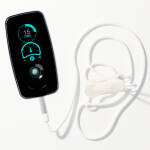
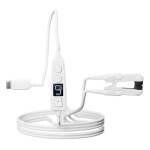
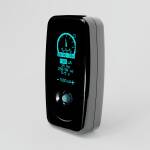
Your skin resistance changes constantly with temperature, moisture, and time of day. A voltage-controlled device delivers the same voltage regardless, meaning the actual current reaching your nerve fluctuates unpredictably. Our tVNS Stimulator is current-controlled: it measures resistance tens of thousands of times per second and adjusts output to maintain a consistent dosage. This is both safer and more consistent with the parameters used in published research.
Built for better
Every device we make is designed around the stimulation parameters used in published research. Current-controlled, adjustable, and compatible with the Vagal Tones protocol library.


A better measure of heart health
Heart rate variability (HRV) is the variation in time between consecutive heartbeats. Higher HRV reflects a nervous system that can flexibly adapt to changing demands: recovering quickly from stress, regulating blood pressure beat-to-beat, and coordinating the body's resources efficiently.
Low HRV is associated with increased risk of cardiovascular disease, diabetes, and all-cause mortality. It declines naturally with age, but research shows taVNS can push it in the right direction. Our Autonomic Rebalancing Tone is specifically designed for this.
The body's natural brake on inflammation
In 2000, Kevin Tracey's laboratory discovered that stimulating the vagus nerve could dramatically reduce pro-inflammatory cytokines like TNF-alpha. They named this the cholinergic anti-inflammatory pathway.
When the vagus nerve detects inflammation, it releases acetylcholine which binds to alpha-7 nicotinic receptors on immune cells, suppressing inflammatory molecules. When vagal tone is low, this braking system weakens. Chronic low-grade inflammation is now recognised as a driver of cardiovascular disease, autoimmune conditions, and age-related decline.
A better way to manage stress
When vagal tone is low, the stress response can feel like it never fully switches off. A 2023 meta-analysis of 12 randomised controlled trials involving 838 participants found that taVNS significantly reduced depression scores, with response rates comparable to antidepressant medication and fewer side effects.
The mechanism works through two routes: an ascending pathway modulates the locus coeruleus for arousal and mood control, while a descending pathway activates the cholinergic anti-inflammatory pathway, suppressing the pro-inflammatory cytokines linked to depression and anxiety.
The people who need it most, benefit most
One of the most consistent findings across taVNS research is that individuals with lower baseline vagal tone show the greatest response. This has been demonstrated in autonomic measures, inflammatory responses, and stress reactivity. taVNS appears to work hardest where the need is greatest.
Better nights, better days
The vagus nerve's role in shifting from sympathetic (alert) to parasympathetic (rest) dominance is fundamental to falling asleep and achieving deep, restorative sleep.
A 2024 randomised clinical trial in JAMA Network Open demonstrated meaningful improvements in chronic insomnia versus sham. A meta-analysis of six studies (336 patients) found improvements across sleep quality, latency, duration, and efficiency.
Vagal tone can be improved at any age
Ageing is associated with a progressive shift: sympathetic activity increases while parasympathetic activity declines. The Leeds University study targeted participants aged 55+ and found daily taVNS improved autonomic function, quality of life, and mood within just two weeks.
Unlike many health markers, vagal tone responds well to intervention. Slow breathing, regular exercise, and targeted electrical stimulation have all been shown to measurably improve it. Even small improvements have significant positive effects on stress management, digestion, and sleep.
What the evidence says about safety
The first systematic review of taVNS safety (Harvard/Spaulding Rehabilitation Hospital) found no causal relationship between taVNS and severe adverse events. The most common side effects were mild and transient: occasional tingling, minor skin irritation, and in rare cases, brief headache.
As with any wellness intervention, we recommend consulting a healthcare professional before starting, particularly if you have implanted electrical devices, cardiac rhythm disorders, or are pregnant.
Where the science stands
Not all evidence is equal, and we think you should know where each area sits. Here's our honest assessment.
| Area | Evidence | Key studies | Our take |
|---|---|---|---|
| Heart rate variability | Strong | Multiple RCTs, consistent replication | Most robustly supported effect. Measurable and consistent. |
| Autonomic balance | Strong | Baroreflex sensitivity, sympathovagal shift | Well-documented across multiple measures. |
| Depression | Strong | 12 RCTs, 838 participants | Consistently positive, comparable to medication. |
| Anti-inflammatory | Growing | RA, IBD, gout clinical trials | Mechanism well-understood. Clinical evidence accumulating. |
| Sleep quality | Growing | JAMA 2024, meta-analysis (336 pts) | Promising. Larger trials would strengthen further. |
| Anxiety / Stress | Growing | Stress reactivity, PTSD models | Consistent signal. Some stress measures respond differently. |
| Epilepsy | Growing | 4 RCTs, 368 patients | Significant seizure reduction. Favourable safety profile. |
| Digestive function | Growing | 6 RCTs dyspepsia (716 patients) | Moderate-certainty evidence for dyspepsia, QoL improvements. |
| Cognitive function | Emerging | Associative memory (Jacobs 2015), brain ageing (Trifilio 2023) | Promising early results in memory and cognitive ageing. More work needed. |
Tones: because one size doesn't fit all
Different therapeutic goals require activation of different nerve fibre subsets. That's why our devices support multiple stimulation Tones -- precision-tuned protocols you load via the Vagal Tones app. From general autonomic rebalancing to targeted digestion and recovery protocols, the science drives the parameters.
Researchers using our Research Edition can create fully custom protocols via the Tone Research Portal.
Ready to feel better?
The science is encouraging. The safety profile is strong. And the people who need it most tend to respond best.
Better starts hereThis page summarises published, peer-reviewed research on non-invasive vagus nerve stimulation. We link to original sources so you can read the evidence yourself. We do not claim that our products treat, cure, or prevent any medical condition. If you have a medical concern, please consult your healthcare provider.