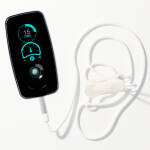





Vagus Nerve Stimulators
Most people choose Buddy: current-controlled precision for a nightly routine. Prefer wireless, or want to try it first? We make those too.
Stimulators
Three devices, one goal: better vagal tone. Most people start with Buddy.
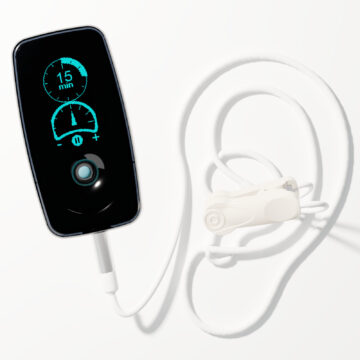
Vagal Buddy tVNS
At-home vagus nerve stimulation without limits. Buddy is a current-controlled auricular tVNS device with wireless charging, so you can charge…
- 45-Day Money Back
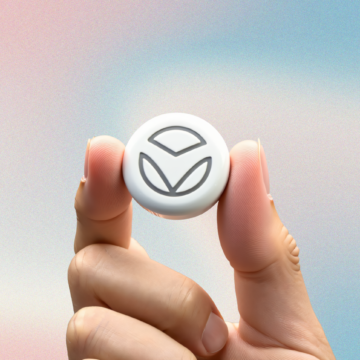
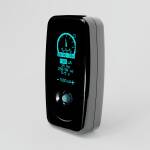
Vagal Oh! Wireless tVNS
Wireless transcutaneous vagus nerve stimulation (tVNS). Compact, rechargeable, and ready to use out of the box. In stock. Ships from…
- 45-Day Money Back
- HSA/FSA Accepted
- Wireless Freedom
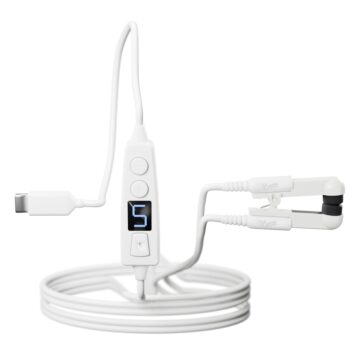
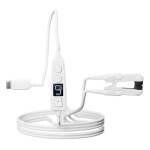
tENS Vagal Boost - At-Home Vagus Nerve Stimulation Device
Vagus nerve stimulation for $59. Plug into your phone, clip to your ear, and feel the difference. Six built-in stimulation…
- 45-Day Money Back
- Boost In Stock
How to Choose a Vagus Nerve Stimulator
Your vagus nerve is the longest nerve in your body, connecting your brain to your heart, lungs, and gut. It regulates the balance between your sympathetic ("fight or flight") and parasympathetic ("rest and digest") nervous systems. When vagal tone is strong, these systems work in balance. When it declines (from stress, ageing, illness, or inactivity), sleep suffers, stress accumulates, digestion slows, and recovery takes longer.
Transcutaneous vagus nerve stimulation (tVNS) activates the vagus nerve non-invasively through a branch that surfaces in the ear. Over 200 published papers have explored its effects on autonomic function, and the technique has been studied in clinical settings for more than two decades.
Not all vagus nerve stimulators work the same way. The most important distinction is how the device controls its output. Current-controlled devices (tVNS) measure your skin's impedance in real time and adjust the voltage to deliver a constant current to the nerve. Voltage-controlled devices (tENS) apply a fixed voltage, meaning the current fluctuates as skin conditions change. Since the therapeutic effect depends on the current reaching the nerve, current-controlled stimulation provides a more consistent and reproducible dose. This is why the majority of published clinical tVNS research uses current-controlled protocols.
Other factors worth considering include whether the device requires conductive gel (an ongoing cost and inconvenience), whether it needs a subscription or app to function, and whether it targets the ear or the neck. Auricular (ear-based) stimulation targets the tragus, which has the most direct vagal pathway to the brainstem and is supported by the widest body of published research.
Vagal offers three devices at different price points. Vagal Buddy ($349) and Vagal Oh! ($499) both use current-controlled stimulation via the EverSteady platform. Vagal Boost ($59) uses voltage-controlled stimulation and is an affordable entry point for people new to vagus nerve stimulation. All three stimulate through the ear, need no gel and have no subscription. Each also comes with a 45-day money-back guarantee.
See what happens in your tragus
Follow one pulse from a Vagal ear clip, across the skin and cartilage of your tragus, to the nerve endings that feel it, which in many people include a branch of the vagus nerve. Slice the ear open, turn the pulse up and see why gel matters.
- The clip
- The slice
- The pulse
- The tingle
- The skin
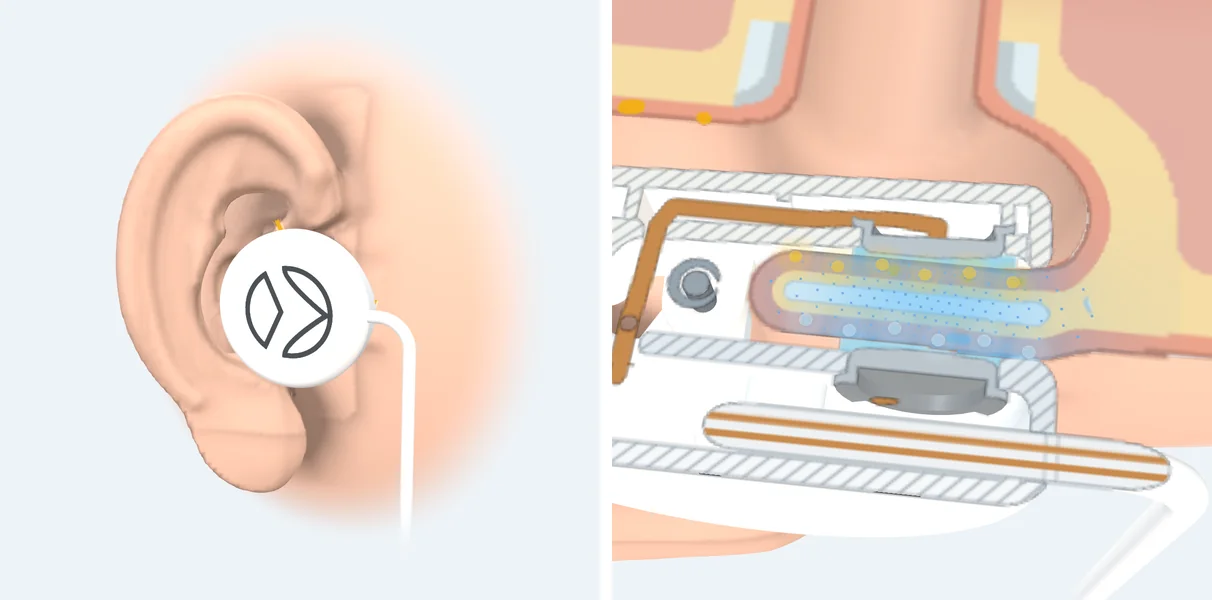 Drag, slice, pulse
Which Vagal is right for you?
Most people choose Buddy. If you need it wireless, or just want to try stimulation first, we make those too.
| Feature | Most chosenVagal Buddy tVNS |
Wireless and discreetVagal Oh!$499 | Try it firstVagal Boost |
|---|---|---|---|
| Best for | A nightly routine. The device most owners choose. | Wearing it while you move about. No screen, no cable. | Trying stimulation on a small budget. |
| Stimulation | Current-controlled (EverSteady). The dose you set is the dose delivered. | Current-controlled (EverSteady) | Voltage-controlled. Output varies with skin conditions. |
| Controls | Screen and joystick on the device, plus the app | App only | Three buttons |
| Programmes | Three Tones on the device, swap any via the app | Tones via the app | Six fixed modes |
| Works with Vagal Tones | Yes | Yes | No |
| Power | 4+ hours per charge, and charges during a session on its wireless pad | About 60 minutes per charge | No battery. Runs from a phone, laptop or power bank (not Samsung phones) |
| Money-back guarantee | 45 days | 45 days | 45 days |
| Choose Buddy | View Oh! | View Boost |
Running a study? Buddy upgrades to the Research Edition. See the research setup.
Accessories & Replacements
Replacement clips and cables for your device
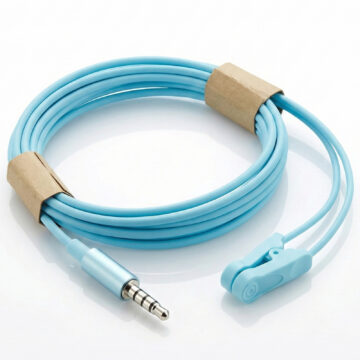
Vagal Ear Clip
The Vagal Ear Clip is a compact tragus electrode with titanium contacts that sit right where they need to for…
- In Stock Next Day Shipping

Vagal tENS Ear Clips
Three clips so you always have a fresh one ready. The original dual-electrode vagus nerve ear clip -- the design…
- In Stock Next Day Shipping

tVNS Charging Cable
The official USB charging cable for Vagal tVNS Stimulator and Vagal Buddy. USB to 2.5mm connector -- the only cable…
- In Stock Next Day Shipping
Which stimulator is right for you?
Answer a few quick questions and we will match you with the perfect device for your needs.
Buying Vagal
Straight answers to the questions people ask before they buy.
Where can I buy Vagal?
Vagal devices are sold online only, and the best place to buy is direct from vagal.com. Every Vagal stimulator bought there comes with our 45-day money-back guarantee, a 2-year warranty and support from the team that makes it.
How much does it cost?
Vagal Buddy costs $349 (usually $399), Vagal Oh! $499 and Vagal Boost $59 (usually $159, US and UK only). Each is a one-time purchase with no subscription, and prices show in US dollars, pounds or euros depending on where you are.
Is there anything cheaper?
Yes. Vagal Boost, at $59 (usually $159), is our lowest-cost way to try vagus nerve stimulation. It plugs into most phones (not Samsung) and is sold in the US and UK. Elsewhere, Vagal Buddy at $349 (usually $399) is our most affordable option. In the US, paying with HSA or FSA funds lowers the real cost further.
How can I pay?
All major credit and debit cards, PayPal, Apple Pay and Google Pay. In the US you can also pay with an HSA or FSA card: how to use HSA and FSA funds.
Do you ship to my country?
We ship to most countries, and people in more than 40 countries use Vagal. Shipping is free to the US, UK, Canada and Australia, and a flat delivery charge shown at checkout applies elsewhere. US orders ship from Reno, Nevada, and orders placed before 1pm Pacific on working days usually ship the same day.
Do you sell refurbished or used units?
No. Every Vagal device is sold new, with our full warranty. We do not sell refurbished, used or returned units.
Questions and honest answers
Can I use tVNS if I have an arrhythmia or other heart condition?
Ask your cardiologist first. The vagus nerve directly influences heart rate and rhythm (that connection is part of how tVNS works), so if you have an arrhythmia such as atrial fibrillation, bradycardia, or tachycardia, or any other diagnosed heart condition, get individual advice from the doctor who knows your heart before using any vagus nerve stimulation device.
Do not use tVNS at all if you have a pacemaker, implanted defibrillator (ICD), or any other electronic medical implant. And if you ever notice palpitations or a change in your heart rhythm while using tVNS, stop and speak to your doctor.
If your cardiologist has questions, our support team is happy to provide clinical documentation and research references. Our devices are consumer wellness products and are not intended to diagnose, treat, cure, or prevent any disease, including heart rhythm disorders.
What if it doesn't work for me?
Is there a subscription?
Who should NOT use this device?
Is this a medical device?
Why does Buddy cost more than Boost?
How quickly will I notice a difference?
Does it hurt?
What is Vagal Buddy?
Can subjects use the device at home for longitudinal studies?
Understanding the Technology
Is tVNS always current-controlled?
Which vagus nerve stimulators use current-controlled stimulation?
Why does current-controlled stimulation matter for vagus nerve stimulation?
What is the difference between current-controlled and voltage-controlled vagus nerve stimulation?
Transcutaneous Vagus Nerve Stimulation (tVNS) Devices by Vagal.com
Shop the full range of non-invasive Vagus Nerve Stimulators to find the right at-home machine for your needs.