




We've been shipping vagus nerve stimulators for a long time now. Thousands of devices, into dozens of countries, used by people dealing with everything from chronic anxiety to post-surgical recovery to stubborn insomnia that nothing else could touch.
And in all that time, we've been listening. To the support emails at 2am. To the researchers who pushed our devices harder than we ever imagined. To the woman who told us she sleeps through the night for the first time in eleven years. To the man who said he'd used his device every single day for two years straight and wanted to know when we were making something better.
Buddy tVNS is our answer. Pre-orders are open today.
The Pattern We Couldn't Ignore
When we designed our first device, it was built for 15-minute sessions. That's what the early research supported, and that's what we optimised for: a tiny device with a small battery and a compact screen, purpose-built for a short daily session.
Then users started asking for longer. Could we support 1-hour sessions? The research was there to back it up, so we updated the firmware to allow it. The hardware coped. It worked.
Then the clinicians got involved. Doctors started recommending 4-hour stimulation protocols. And suddenly our little device, designed around a 180mAh battery and the smallest possible enclosure, was being asked to do something it was never built for.
We could see the pattern: 15 minutes, then 1 hour, then 4 hours. The asks were only going in one direction. And every time someone needed longer, we were going to face the same question: how do we fit a bigger battery into this thing?
We didn't want to spend the next decade shoehorning progressively larger batteries into progressively larger cases. That's not solving the problem, that's just delaying it. So we asked a different question: what if we remove the ceiling entirely?
EverCharge: The Answer to a Problem That Keeps Growing
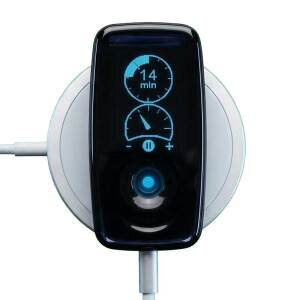
Wireless charging isn't new. Your phone probably does it. But for a nerve stimulator, it solves a very specific problem that wired charging can't.
With a cable, there's a direct electrical connection between the mains power supply and the device on your body. That's why every stimulator on the market, including ours, tells you to stop your session before you charge. You can't have a wire running from the wall socket to something attached to your ear. It's not safe.
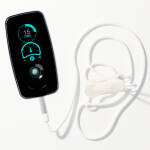
Wireless charging transfers energy across an air gap. There's no conductor, no electrical path from the wall to you. The technical term is galvanic isolation, and it means Buddy tVNS can charge while you're wearing it.
Start your session. Place the device on its charging pad. Keep stimulating. Your battery fills up while you use it, and there is no limit to how long you can go. The doctor says 4 hours? Fine. Someone else needs 6? Also fine. We don't have to redesign the hardware for every new use case, because EverCharge means session length is no longer a battery question.
That's the real point of this feature. It's not just about convenience. It's about building a device that doesn't become obsolete every time the clinical recommendations change.
No Limits on Duration. No Limits on Protocol.
Here's where it all comes together. We'd already removed the limits on what clinicians can do with our stimulation parameters. Through the Vagal Tone Portal, doctors and researchers can build any protocol they can imagine: any frequency, any pulse width, any current, any duty cycle. There are infinite combinations. Sham modes for blinded trials. Anti-habituation routines. Protocols we never anticipated when we designed the original device.
But there was always this contradiction: you could design any protocol you wanted, but you couldn't run it for longer than the battery allowed. The software had no limits. The hardware did.
With EverCharge, that contradiction is gone. A clinician can design a 6-hour low-frequency protocol for a sleep study and know the device won't die at hour three. A researcher can run sustained stimulation experiments without worrying about battery as a variable. The device finally matches the ambition of the people using it.
No limits on what you stimulate. No limits on how you stimulate. And now, no limits on how long.
We Made the Battery Bigger Anyway
Even with wireless charging, we tripled the battery from 180mAh to 540mAh. That might sound contradictory, but there's a good reason.
Not everyone uses the charging pad during every session. If you're on the sofa, at a desk, or travelling, you might just pick up the device and go. A 540mAh battery means those sessions last significantly longer without needing the pad at all.
And for the people who do use EverCharge, the bigger battery is a safety net. If the device gets nudged off the pad, it doesn't die in twenty minutes. It keeps going for hours. That peace of mind matters, especially for longer protocols where you're not watching the device the whole time.
A Screen You Can Actually Read
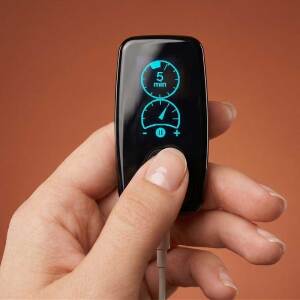
This one came straight from customer feedback, and it's embarrassingly simple. People kept telling us the screen on Gen 1 was hard to read, especially when they were using it in the evening, or in bed, or without their glasses.
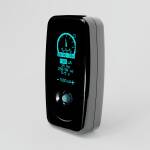
Buddy has a 30% larger OLED display. The timer is bigger. The intensity gauge is clearer. It sounds like a small thing, but when you're using a device every day, the small things add up. We should have done this sooner.
Same Stimulation. Same Clips. Same Protocols.
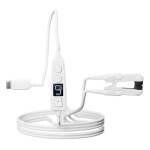
Here's what we deliberately didn't change: the stimulation itself. Buddy uses the same EverSteady current-controlled output as our Gen 1 device. The same precision. The same micro-pulse waveform. The same ear clips, the same Vagal Tones app, the same Bluetooth protocol system.
We know people get nervous when they see "new generation", worried that the thing they rely on every day is going to feel different. It won't. If you've been using our Gen 1 device and it's been working for you, Buddy will feel exactly the same on your ear. The improvements are all about the hardware surrounding the stimulation: how you charge, how long you can go, and how clearly you can see what's happening.
If your current device is working and you're happy with your sessions, there's no pressure to upgrade. But if you've ever run out of battery mid-session, or wished you could go longer without stopping, or squinted at the screen in the dark, that's what Buddy is for.
Pre-Order Now
Buddy tVNS is $349 and the first production run is limited. Pre-orders ship in the order they're received, so if you want to be in the first batch, now's the time.
Same 45-day money-back guarantee as always. Use it every day for six weeks. Not right for you? Send it back. We've offered that guarantee since day one and we're not about to stop now.
Already own a Gen 1 tVNS Stimulator and have questions? Our support team can help you figure out whether Buddy makes sense for you. No sales pitch, just honest advice. Get in touch.