




<
Simon's setup is the entry-level version of this, and it is perfectly reasonable. A pharmacy TENS unit. A dual-electrode ear clip on one ear. Settings of 20 to 30Hz, pulled from the published literature. Total spend, well under £100. He has been doing this for seven months and his only side effect has been a mild tingle.
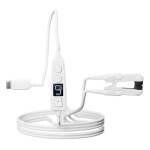
This is exactly what our Vagal tENS Ear Clips are designed for. They were the first thing we ever made, back in 2019, when a researcher asked us to manufacture a dual-electrode clip for a vagus nerve study. The clips are deliberately high-impedance: they limit how much current any over-enthusiastic generic TENS machine can push into your ear. That is not glamorous. It is just safer.
The 3-pack is the version most people end up wanting. Why three?
- Silicone electrodes wear. With daily use, most clips last 3 to 6 months before conductivity drops off. Having spares in the drawer means your routine never has to stop because Royal Mail is having a moment.
- If you want to follow Ackland's protocol literally, you need two. The published study used bilateral stimulation: one clip on each tragus. That is not what Simon is doing (he uses one ear, the more conservative choice), but if you want to try the exact protocol that produced the headline VO2max result, you need a clip per ear.
- It is cheaper than buying them one at a time. Same product, lower cost per clip. No mystery there.
Vagally Curious? If you already own a TENS machine and you just want to see what all this fuss is about, the clips are genuinely the cheapest honest way in. Plug, clip, dial it down low, see what you notice over six weeks. If nothing changes, you are out the price of a decent dinner.
What the Cheap Route Cannot Give You
This is the part of Simon's article we want to lean into, because he is admirably honest about it himself.
"My dedicated but utterly unscientific use of tVNS demonstrates why more robust studies are needed. There are just too many variables to account for. The settings I'm using are generic, rather than individualised, and whereas Ackland's team used bilateral tVNS, I'm hooking up just my left ear, which is less likely to introduce cardiac side effects, but is possibly less potent too."
That paragraph is a quietly devastating summary of every limitation of the DIY route. Let us spell out what it actually means.
1. Voltage-controlled tENS is not the same as current-controlled tVNS
A pharmacy TENS machine delivers a set voltage. Your skin is not a fixed resistor. Its impedance changes constantly with temperature, moisture, the time of day, how much paste you used, and where the clip happens to be sitting. With voltage-controlled output, the actual current reaching your nerve drifts unpredictably. You cannot dose what you cannot measure.
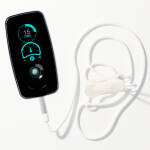
Our tVNS Stimulator and Vagal Oh! are current-controlled. Internally, they re-measure your skin impedance fifty thousand times per second and adjust the output to keep the current you set as the current you actually receive. That is the same delivery method the published research uses, including Ackland's study.
If you want to know whether tVNS is doing something for you, you need to know what your nerve is actually receiving. The cheap route cannot give you that.
2. The settings on the internet are guesses
Simon mentions he used "low-frequency pulse rate 20-30Hz, to match natural electrical impulses". That is a perfectly defensible starting point, but it is also one number out of dozens that matter. Pulse width. Duty cycle. Ramp profile. Inter-train interval. All of these change what your nerve actually does. The Ackland study used a specific protocol. So does every other published trial. Knock-off TENS machines do not give you most of these parameters, never mind the precision to set them reliably.
3. There is no record of what you did
If Simon's VO2max went up, he would not know it from his Garmin alone, and he would not know which session caused it. That is not a criticism. It is simply the reality of self-experimentation without instrumentation. Our devices log every session through the Vagal Tones app. Researchers using our Research Edition can pull session-level data into their analyses. If you are serious about using tVNS as a performance tool, you eventually need a paper trail.
Where the Upgrade Path Goes
The honest progression looks like this. Try the cheap route first. If you notice something (better sleep, calmer mornings, faster heart-rate recovery, fewer ectopic beats like Simon), then it is worth stepping up to a device that actually controls what is being delivered.
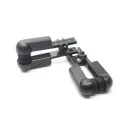
And because we genuinely mean this: if you buy a 3-pack of tENS clips and decide to upgrade later, we will credit the full price of your clips toward any of our stimulators. The clips are not a sales funnel. They are a starting point. If they show you that vagus nerve stimulation does something for you, we want the next device you own to be one that gives you proper control.
The serious options, briefly:
- tVNS Stimulator: $399. Current-controlled. 15 intensity levels. Sterling silver electrode clip. The same delivery method used in published research. This is the device clinicians and researchers reach for when they want to actually know what they are dosing.
- Vagal Oh!: $499. Same EverSteady current control, in 18 grams of clip-and-go wireless. App-controlled. IPX4. Designed for people who would rather stimulate during a recovery ride than sat on the sofa.
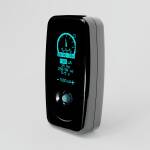
- Research Edition: $699. Programmable parameters, sham mode, data logging. For when you want to run something resembling Ackland's protocol on yourself, properly.
One Last Thing: Bilateral vs Unilateral
Simon mentions that he uses just one ear, the conservative choice, less likely to introduce cardiac side effects, but possibly less potent. Ackland chose bilateral because contemporary research suggests it is more effective at inducing the brain plasticity changes underneath the headline benefits.
This is a real and unresolved question in the field. We do not pretend to have settled it. But it is one of many reasons we recommend that anyone using bilateral protocols, particularly with anything cardiac in their history, uses current-controlled equipment with proper intensity steps and a hard maximum, not a generic TENS unit dialled by feel.
Simon, to his enormous credit, made the right judgement for himself. His AF symptoms disappeared within two days of starting and have not come back. He is using one ear. He is being careful. We tip our hat.
Read the Article. It Is Worth Your Time.
Whatever you decide to do next, go and read Simon's piece. It is rare to see a fitness publication treat this technology with the appropriate mix of curiosity and scepticism, and rarer still to see a writer be honest about the limits of his own experiment. We are quietly chuffed to have featured.
Read "Watts in Your Ears" at Cycling Weekly →
And if you want to start where Simon started, cheaply and sensibly, with the safer high-impedance clips that make the whole thing less likely to bite, our 3-pack of tENS Ear Clips is here. Spares in the drawer, plus the option to go bilateral when you are ready. The cheapest honest entry point we know how to make.
Better starts here.
Disclosure: Cycling Weekly did not commission, review, or pay for this post. We just liked seeing our clip in the magazine and wanted to add the context Simon did not have room for. The Ackland study (DOI: 10.1093/eurheartj/ehaf078) is open access and well worth a read if you want the actual numbers.
Vagal devices are wellness products, not medical treatments. They are not intended to diagnose, treat, cure, or prevent any disease. Do not use any vagus nerve stimulator if you have a pacemaker or other electronic medical implant, and consult your doctor first if you have a heart condition or are pregnant.
]]>